You are currently viewing Wisdom Tooth Extraction Indications

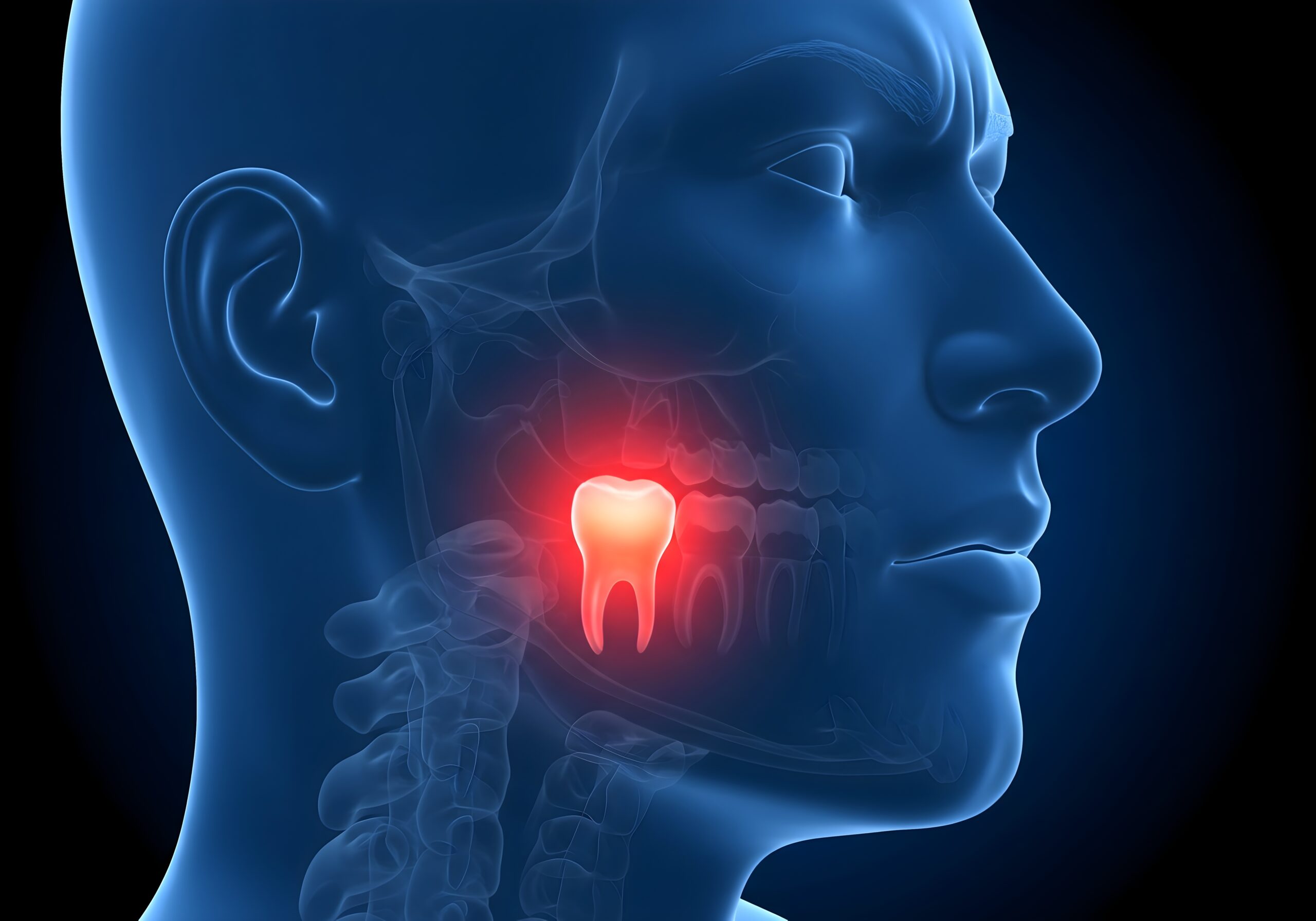
Wisdom tooth (third molar) extraction is one of the most common surgical procedures in dentistry, yet its indications remain a subject of ongoing clinical debate. Decisions to remove or retain third molars require careful evaluation of symptoms, pathology risk, and patient-specific factors.

In this section, clinical use cases are structured using Odontology AI methodology, which standardizes decision-making into clear, reproducible steps. Each case is analyzed through a consistent framework: a concise clinical scenario, key clinical and radiographic findings, AI-assisted interpretation, and a final evidence-based indication or contraindication for extraction. This approach supports systematic thinking, reduces variability in clinical judgment, and aligns everyday practice with current guidelines.

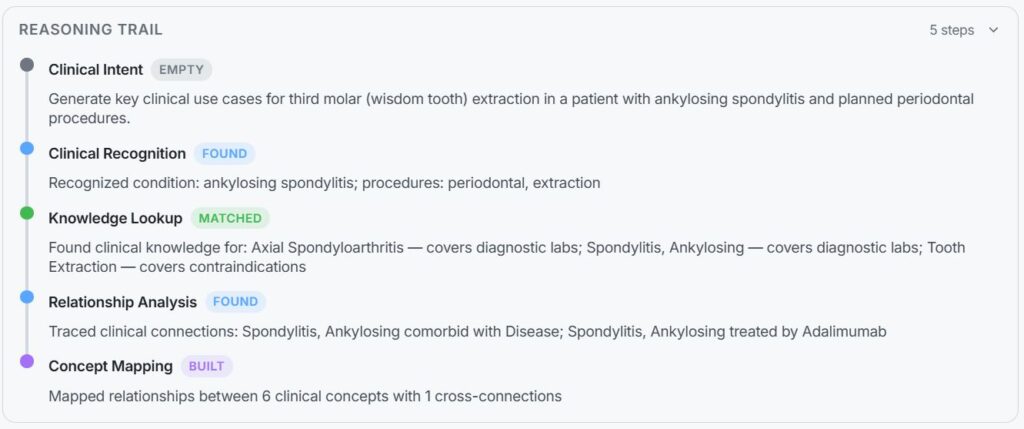
The clinician’s query is translated into a structured clinical plan.

Instead of generating a direct answer, Odontology AI breaks the problem into logical steps: evaluating indications, reviewing evidence, assessing systemic risks, and considering contraindications.

This mirrors real clinical reasoning and ensures that no critical factor is overlooked.

Once the relevant concepts are identified, Odontology AI retrieves structured clinical knowledge from validated sources and organizes it into key entities and insights.
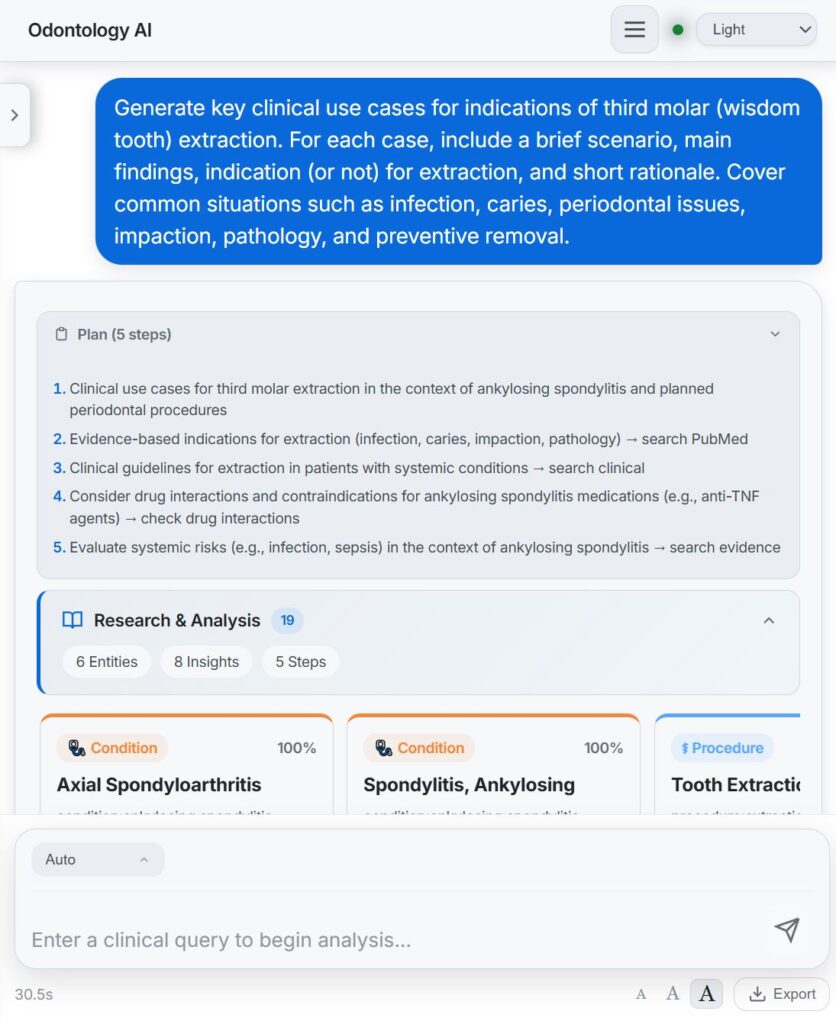
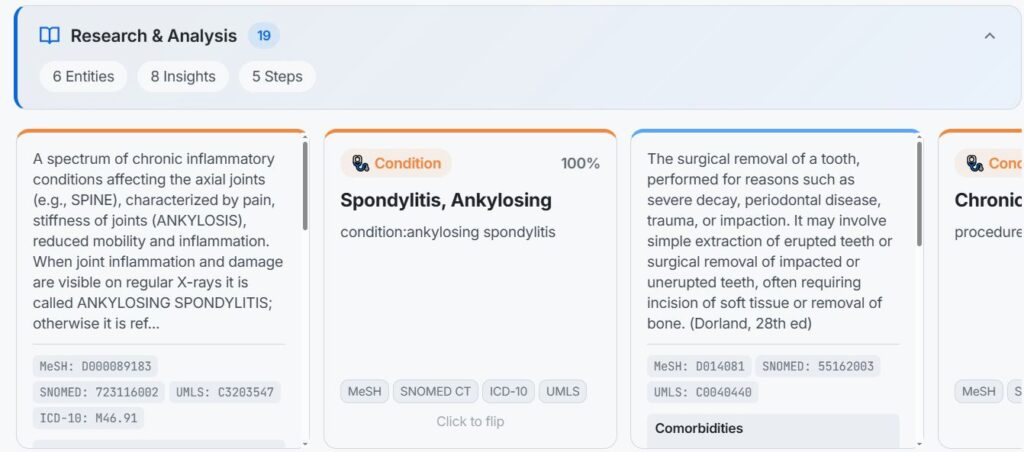
Use Case Wisdom tooth Conditions and Procedure cards

Here, the AI highlights the most relevant conditions and procedures associated with the query.

Each entity is enriched with standardized medical classifications (MeSH, SNOMED, ICD-10), allowing the clinician to quickly verify definitions, explore comorbidities, and understand how systemic diseases may influence treatment decisions.

This step transforms raw information into clinically actionable knowledge.

Use Case Wisdom tooth Reasoning Trail

The Reasoning Trail provides full transparency into how the AI arrives at its conclusions.

Each step—from clinical recognition to knowledge lookup and relationship analysis—is explicitly shown.

This allows clinicians to validate the logic, follow the decision-making pathway, and build trust in the system.

Rather than a “black box,” Odontology AI functions as a clinical co-pilot, making its reasoning visible and teachable.

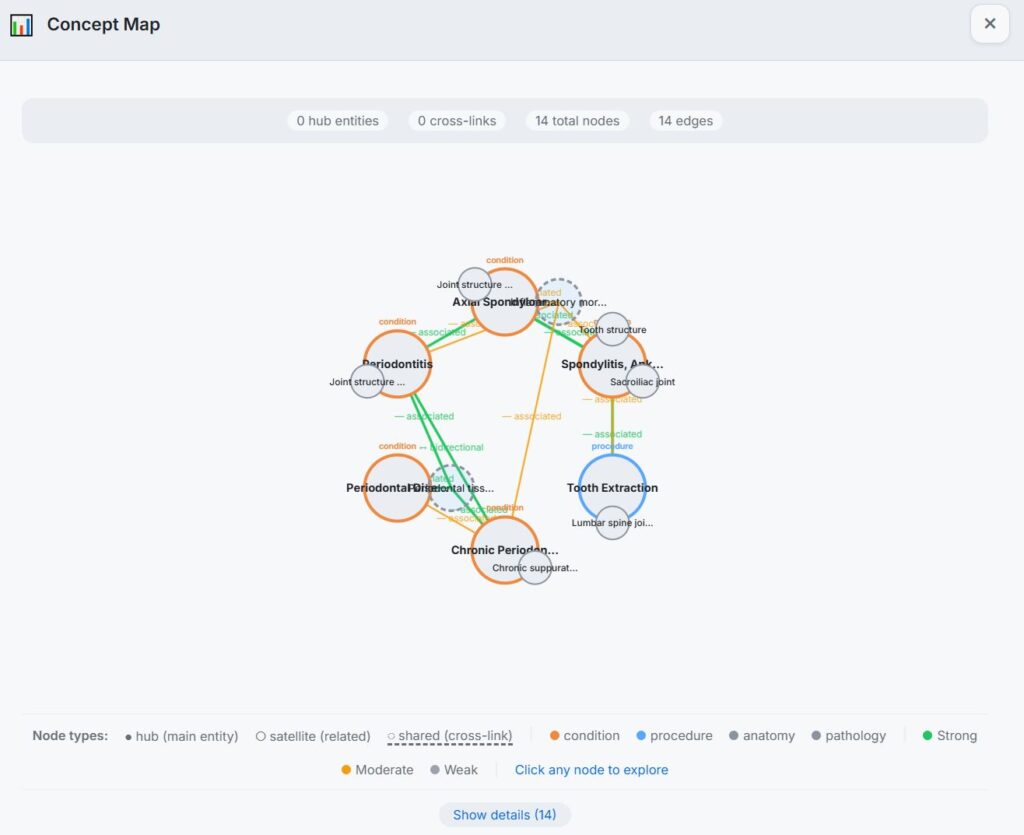
The Concept Map visualizes how the AI connects multiple clinical entities.

In this case, third molar extraction is not evaluated in isolation. The system identifies relationships between periodontal disease, chronic inflammation, and systemic conditions such as ankylosing spondylitis.

This network-based reasoning helps clinicians understand not only whether to extract, but why, by revealing underlying clinical connections.

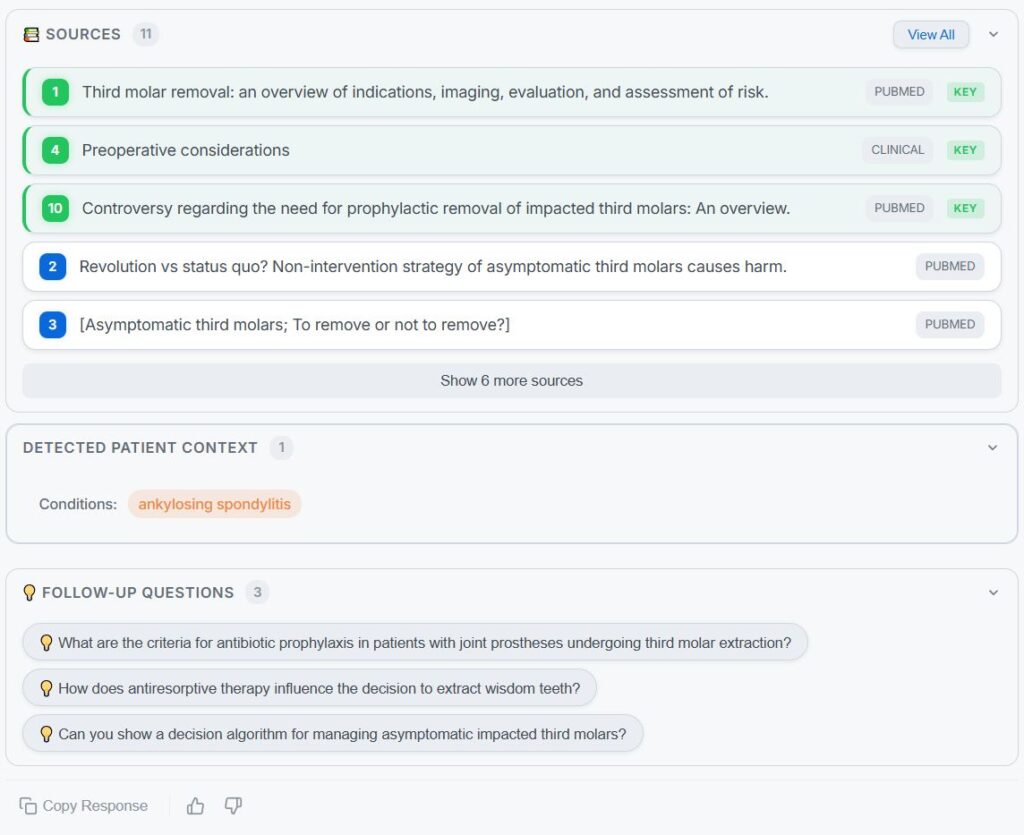
Use Case Wisdom tooth Sources and Follow up questions

All recommendations are supported by curated clinical sources, including peer-reviewed literature and guidelines.

In addition, the AI generates follow-up questions that expand the clinical perspective—such as medication risks, antibiotic considerations, and management of asymptomatic third molars.

This encourages deeper learning and helps clinicians move beyond single-case thinking toward comprehensive patient care.

Author

  • Skills are based on knowledge

    Dental Mammoth Ltd is a globally operating dental innovation company. Dental Mammoth’s mission is “Skills are based on knowledge” – we produce innovative knowledge services and products to support clinical work and education.